Security
After Bend: Building Schools Where Every Child Comes Home

On Thursday afternoon, October 15, a 16-year-old forced his way through the locked doors of Silver Rail Elementary School in Bend, Oregon. Police say three children, ages 5, 8, and 11, and a teacher were killed. A 7-year-old and a second teacher were critically injured. It ended within minutes, when a community member who saw the attacker enter followed him inside and stopped him, as officers were arriving.
Before anything else: our hearts are with the families of Silver Rail, with its teachers and staff, with the first responders, and with everyone in Bend who will carry this day for the rest of their lives.
We know these hallways
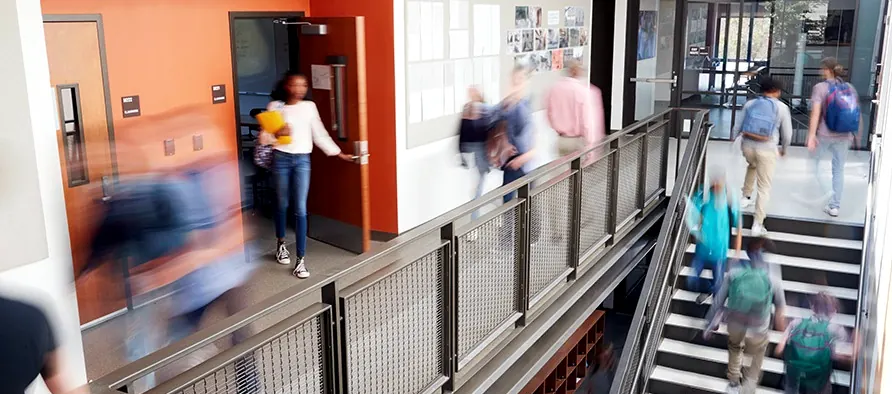
For twenty years, InCare’s work has happened in schools. We’ve mounted panels in kindergarten classrooms with crayon drawings taped to the walls. We’ve run cable above special-education rooms while teachers read aloud below us. We’ve stood at front doors at 7:40 in the morning and watched the car line deliver hundreds of backpacks, lunchboxes, and small hands waving goodbye.
So when a school like Silver Rail makes the news, we don’t think about products first. We think about those front doors. We think about the parents who will drive that car line again, and the teachers who will unlock their classrooms tomorrow and look at the door a little differently.
And we think about what every one of us can do, starting this week, to make sure our schools keep the promise every parent trusts them with: my child comes home.
Locked doors are where security begins, not where it ends
The doors at Silver Rail were locked. Investigators say the attacker shot his way through them. That one detail holds the most important lesson in campus safety: no single measure is enough. Real protection comes in layers, each one buying seconds, and seconds are what give staff time to act and responders time to arrive.
Picture your own campus as you read these. Walk it in your mind, from the parking lot to the farthest classroom.
1. Delay: control every way in
- A single, controlled point of entry, with a secure vestibule and a video intercom so the front office can see and speak with visitors before anyone is buzzed in.
- Badge access on every exterior door, with door-position alerts that tell you the moment a door is propped open or forced.
- Electrified door hardware that locks on command and logs every event.
ProDataKey and Verkada access control let a principal manage every door from a phone or a single button.
2. Detect: see it sooner
In Bend, the first call to 911 came from someone outside the building. Cameras that cover your approaches, parking lots, and entrances, not just your hallways, can turn those first moments into warning instead of surprise. Modern systems let staff search footage in seconds and share a live view with local police during an emergency. See our surveillance solutions.
3. Alert: one action, every room
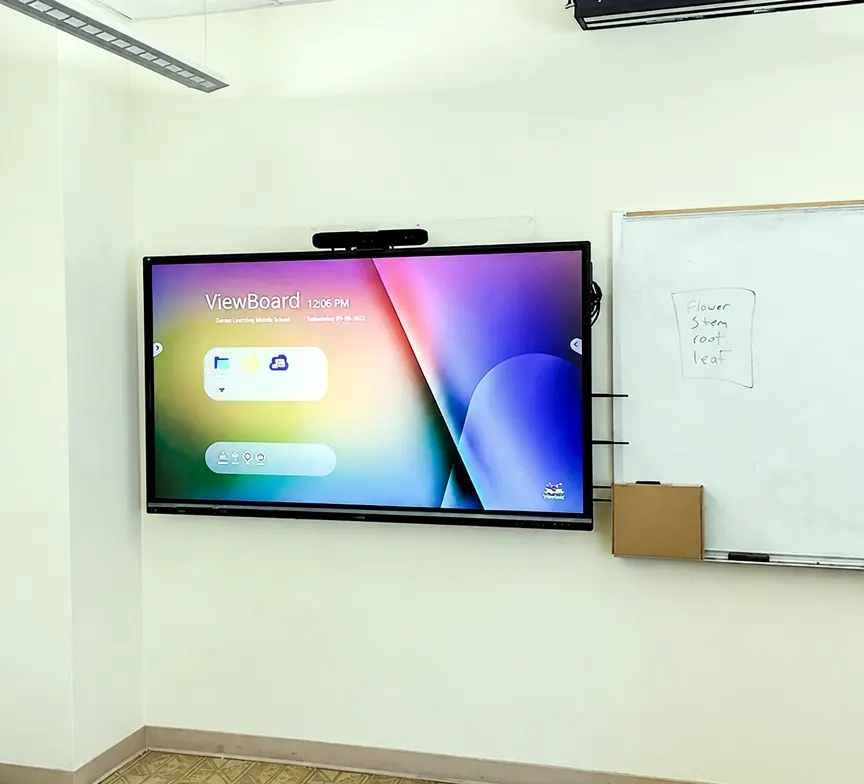
When something is wrong, everyone needs to know at once: every classroom speaker, every hallway display, every desktop, and every phone. Integrated systems can lock every exterior door, play the lockdown message, and notify staff and responders with a single action or a wearable panic button. A growing number of states now require silent panic alarms in schools under laws inspired by Alyssa’s Law. Learn about intercom and mass notification.
4. Respond: give responders eyes and keys
Officers arriving at an unfamiliar building lose precious time finding their way. Live camera links, remote door control, and accurate floor plans help them go straight to where they’re needed.
5. Practice: make the plan muscle memory
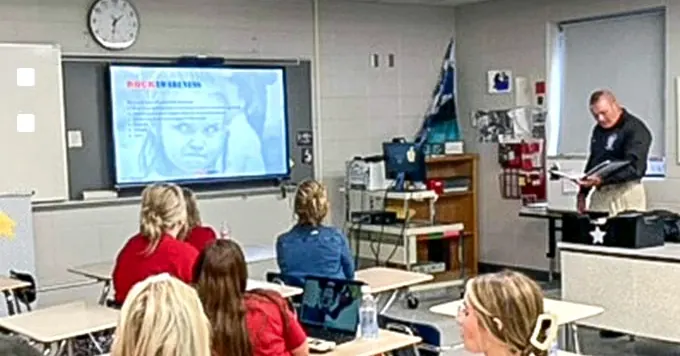
Technology only works when people know how to use it under pressure. Districts like Lauderdale County pair upgraded systems with realistic, multi-agency drills, so that on the worst day, everyone already knows their part.
Technology is one layer, never the whole answer
We want to be honest with you. No camera, lock, or alert system can promise that a tragedy will never happen. The strongest school-safety plans also invest in behavioral threat assessment, mental-health support, and the trusted relationships that help adults hear warning signs early. Security technology works best as part of that bigger commitment, not as a replacement for it.
What technology can do is buy time, close gaps, and help the people inside a school act faster and with more confidence. When minutes matter, that difference is everything.
Funding shouldn’t be the reason you wait
Many districts tell us the same thing: we know what we need, we just can’t afford it. Federal programs such as the DOJ’s School Violence Prevention Program (SVPP) and the STOP School Violence grant, along with state school-safety funds, exist for exactly this work. Since 2019, InCare and our grant partners have helped K-12 applicants pursue these programs, and districts like Perry County have used federal funding for cameras and access control. Explore grant assistance.
Start with a walk-through
If Bend has you looking at your own front doors, you’re not alone, and you don’t have to figure it out by yourself. Your local InCare rep can walk your campus with your principal and school resource officer, show you where the gaps are, and help you build a phased plan your district can actually fund.
Call us at (334) 819-1035, or request a campus security walk-through. We’ll start where every good plan starts: with the doors your students walk through every morning.
---
Sources: CNN, PBS NewsHour / Associated Press, and ABC News. The investigation is ongoing, and details may change as officials release more information.